First, congratulations on getting accepted into graduate school! That’s a huge accomplishment. I hope you take the time to let that soak in, and after you’ve celebrated all the hard work that you put into applying, that you also celebrate your first acceptance (if you haven’t celebrated the sheer accomplishment of applying to graduate school, please do that, too :)).
If you’re like me (and everyone else, really) you’re trying to decide which PhD program to select and where you want to spend the next 5-6 years of your life. There is a lot to think about, and I want to help make the process a bit easier by sharing all that I’ve learned from my own selection process. If you were accepted into one program (which is an amazing accomplishment), this post can still be helpful to you when it comes to getting a better sense of the institution before you start.
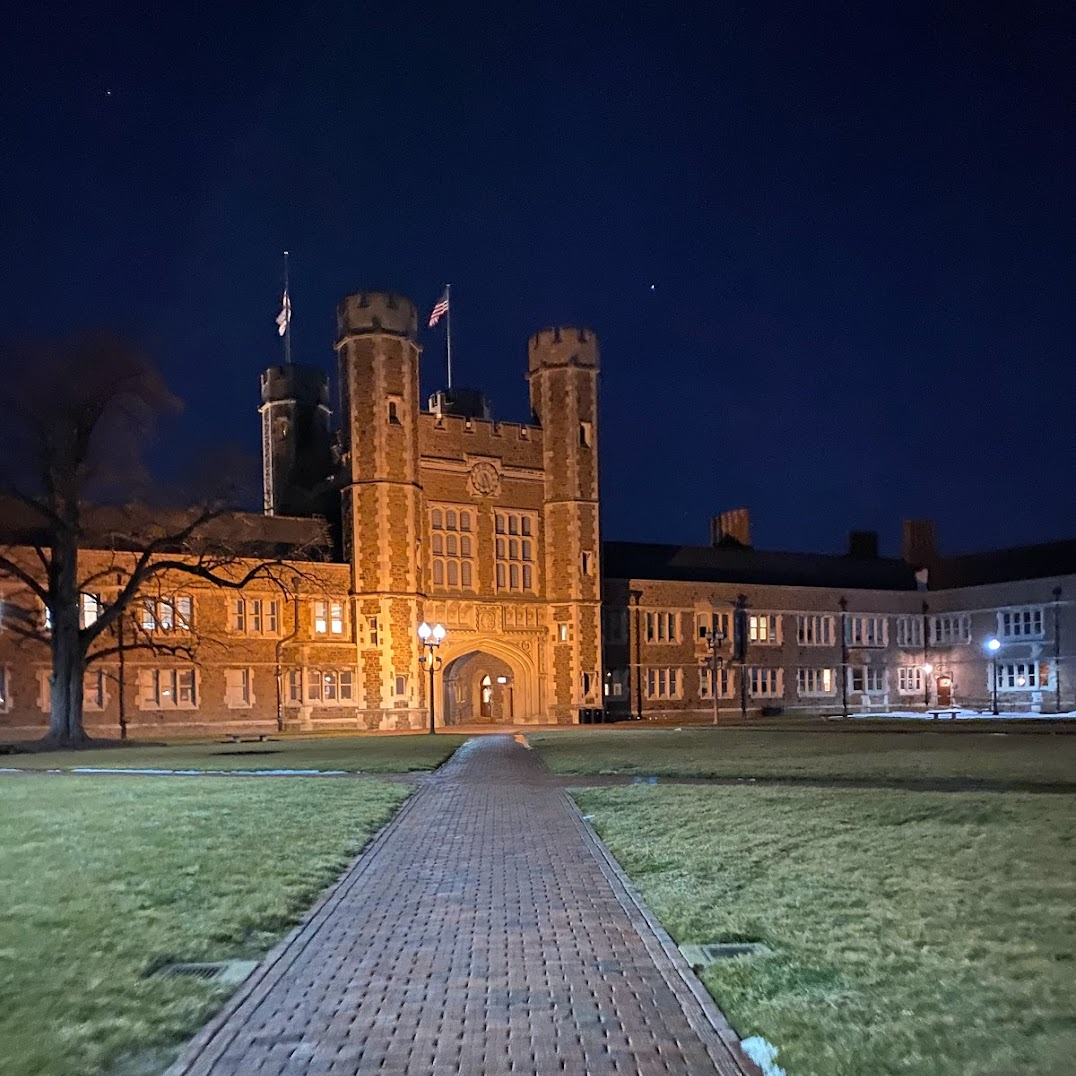
I applied to 12 PhD programs and 2 master’s programs, and I was accepted into 2 PhD programs, 1 master’s program and waitlisted for a couple of schools. I ended up choosing Washington University in St. Louis (WashU) because of the intellectual community, cost of living to stipend ratio, graduate student community and location. I talked through all of these things with advisors and took a lot of notes while I was virtually visiting these schools.
Starting with the intellectual community, there were multiple people I could see myself working with at WashU and, in particular, someone who was also thinking about similar things research-wise. So the intellectual fit was promising. I went about finding the intellectual fit by speaking with prospective advisors and professors in my field, via zoom, phone call and email. So I definitely encourage you to request to speak with the people you listed on your application if they don’t organize conversations with them already. Plus, I asked graduate students who were working with these professors what their experience was with my faculty of interest.
Second, my stipend was a generous amount, supplemented by two fellowships that I was recommended for (the effort and intentionality that the Director of Graduate Studies really demonstrated that WashU wanted me, which was also reassuring). Also, while the stipend that the other PhD program offered me was initially more than WashU, the cost of living in that city was higher than St. Louis, so money would have actually been tighter. The other institution also required teaching (in the form of TAing) from the start, while WashU doesn’t have us teach for the first two years while we take courses. So when comparing stipend packages, I definitely encourage you to ask graduate students how much they spend on rent, groceries and such to get a sense of how much it costs to live in that city.
Thirdly, the graduate student community was also a really important factor for me. The WashU graduate student community was (and is—thank God they weren’t putting on a front) very collegial and I didn’t get the sense that people were competitive with each other. The graduate students were super generous and willing to share with me how much they make and how much they pay for their bills, as well as their experiences at WashU, which I really appreciated. Also, there was a group for Christian faculty and graduate students at WashU called The Carver Project, which I absolutely loved the idea of (and love being a member of!). That organization, in addition to peaking my interest, confirmed that there was both an intellectual and faith community for me at WashU. The two fellowships that I had also placed me in more sub groups of community at WashU, which I really appreciated.
Lastly, I also chose WashU because of the location. While the other program I was considering had more Black people in the department, and WashU was very White , the actual city of St. Louis was more diverse than the city of the other school. As a graduate student, I knew that I would be more involved in the local community compared to when I was as an undergrad living on campus all 4 years. So, it was important to me that I could be around other people who looked like me and a church community I could see myself in. The other school’s location was predominantly White, rural, and Republican (Trump town)…I did not want to live in such an isolating environment. I should also mention that I don’t have a car, and St. Louis was going to be much easier to navigate without a car than this rural area. I would definitely encourage you to think about what is important to you where you live and then, ask people who live there if those things are offered and what their experience is if they share some similar interests.
In short, these are the things that I was advised on and considered when picking a PhD program:
- Your stipend is enough (so you’re not forced to over-teach constantly or protest)
- You have at least 2 strong potential advisors who are nice, whose work can inform yours, and who plan to stick around at that institution,
- You’re happy living in that area, being that far or that close to loved ones, and happy being a student in that program.
- It’s all about fit, trust your gut once you’ve spoken to everyone and whatnot; does this place feel good? And will it feel good for about 6 years?
- Are there faith communities that I can be part of?
- The type of place you think would best support you based on your research interests and the faculty and the presence of a community within and beyond your department that can help develop you as a student and scholar.
For a more extensive list of questions based on advice I asked of mentors (graduate students and faculty mentors), see this document.
Overall, I prayed about it, talked to mentors throughout the process and just chose! I was nervous about choosing WashU because I initially saw myself in the East Coast, but God had other plans. And man, were they better! A piece of advice that my friend, who was also going through the PhD decision process at the same time (shoutout to Mpho!), shared was this: think about the people (namely professors) who are sharing their thoughts about where to go as a sports team, but ultimately you are the coach and you make the final call. Pick the best place for you—don’t overthink it. And wherever you go, commit to building community and making the most of it.
P.S. OMG! If you have two offers and the school you are interested in is offering less than another school, feel free to negotiate and say that another school is offering more. Consider requesting relocation funds, especially if another one of your schools is offering that, and your school of interest may match too. That’s what I did with WashU: I told them about relocation funds that the other school was offering and they happily offered to match that!
Writing Album: Kingdom Book One by Maverick City Music and Kirk Franklin
 WhollyRebecca